Google launches AR glasses in 2026 equipped with Micro LEDs
- author:
- 2025-12-25 17:55:41
According to the latest report from foreign professional media Micro LED-info, Google is accelerating the AR hardware ecosystem layout and plans to launch two new AI AR glasses products in 2026. One of them adopts a screenless design, and the other is equipped with a monocular Micro LED display. This product plan has once again attracted the attention of the global display and AR industry to Google's hardware strategy. It is worth noting that Google's core goal is to create a portable device with a minimalist form, and its core functions will cover notification displays, information prompts and smart watch-like services; it is expected to launch a binocular version in 2027 to further improve the product matrix.

Looking back at Google's layout trajectory in the AR display field, its bet on Micro LED technology has long been paved. In 2022, Google officially acquired Raxium, a U.S. Micro LED display developer, bringing its core technical team and R & D capabilities under its command. Since then, it has continued to promote the technological iteration of micro displays. In December 2024, Google launched the latest Project Astra AR glasses in a related technology demonstration. This product is equipped with a Micro LED micro display module developed by Raxium, marking the phased result of the technological integration of the two parties.
Entering 2025, Google's layout in the field of AI and AR glasses continues to accelerate. In October this year, at the Future Investment Initiative Conference held in Riyadh, Magic Leap, a leading company in the AR field, officially announced the extension of its strategic partnership with Google for three years. The two parties will focus on the joint development of AR glasses based on Micro LED display technology. Public information shows that Magic Leap has more than ten years of technical accumulation in the field of AR optics, and its self-developed optical waveguide technology has set an industry performance benchmark; while Raxium has core advantages in the miniaturization integration and high-brightness output of Micro LEDs. The technical synergy between the two will effectively promote the unification of AR devices with lightweight forms and high-quality display effects, providing key support for the experience upgrade of Google AR products.
From the perspective of industry strategy, Google's intensive deployment of Micro LED AR glasses is not only a hardware complement to its own Android XR ecosystem, but also conforms to the trend of global AR devices evolving towards lightweight and high-performance. With the deep integration of AI technology and AR display, Google is building a full-chain competitiveness of display technology + optical solutions +AI ecosystem through a dual path of technology acquisition and cross-border cooperation, and is expected to seize the lead in the next generation of smart terminal tracks.
TAG:
Guess you want to see it




Popular information
-
CEO of TV IKLAN Group, Indonesia's largest media company, led a delegation to inspect MNLED and the

-
Technology lights up Star City! Changsha's new cultural tourism landmark "Mango VIDEO" made a shocki
-
Guoxing Optoelectronics: LED reliability is protected by ultrasonic scanning
-
Zhouming Technology: A shining star at the Chain Expo, and its innovation shines on the global stage
-
Skyworth Commercial: Why is it unique in the smart commercial display market?
-
Zhouming Technology: Immersive optical display solutions are listed on the list of "2024 Typical Cas
-
Sapien Semiconductor: Business expansion and contract upgrades drive development
-
Guoxing Optoelectronics and its subsidiary technology center received provincial authoritative evalu

-
Liard: An outstanding practitioner of the first-time economy, innovation drives change in multiple f

-
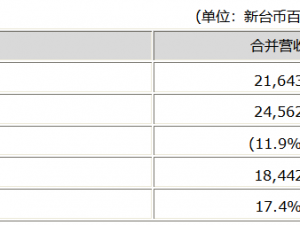
AU Optronics 'consolidated revenue in January 2025 reached 21.6 billion yuan, a slight decline from
the charts
- CEO of TV IKLAN Group, Indonesia's largest media company, led a delegation to inspect MNLED and the
- Innolux joins hands with Yuantai, TPV and others to introduce large size color electronic paper into
- Xida Electronics signs a strategic cooperation agreement with Changbai Mountain Chixi District Manag
- Liard joins hands with "Three-Body" to open a new era of science fiction drama in China
- Zhaochi Semiconductor joins hands with Li Xing Semiconductor. Want to do big things?
- Zhou Ming joins hands with the Guangdong Basketball Association to produce another masterpiece! The
- ISE2023 Abbison's first exhibition in the new year has received frequent good news, and the immersiv
- Samsung Display and APS "work together" to create 3500ppi Micro OLED
- Zhouming Technology and Perfect World officially reached an educational ecological partnership!
- Longli Technology:Mini-LED has been shipped in batches to some in-vehicle customers, VR customers, e